How AC Tune-Ups Help Prevent Mid-Summer Breakdowns
There is a particular kind of silence that no homeowner wants to hear in July. Not peaceful silence. Not “coffee before the kids wake up” silence. I mean the heavy, suspicious silence that settles over the house when the air conditioner stops running at 3:17 p.m., the thermostat says 78, and the living room feels like a baked potato.
That silence usually arrives after weeks of warnings. A longer run time here. A faint rattle there. A vent that feels less enthusiastic than it used to. The air conditioner, noble machine that it is, tries to soldier on until the hottest day of the year, then gives up like a lawn chair at a family reunion.
That is where the humble AC tune-up earns its keep.
An air conditioning tune-up is not glamorous. Nobody brags at dinner parties about having their capacitor tested or their condensate drain cleared, although perhaps they should. But regular air conditioning maintenance is one of the simplest ways to prevent a mid-summer breakdown, lower stress on the system, and avoid the dreaded emergency call to an air conditioning repair service when every other AC in town is also wheezing.
The trick is understanding what a tune-up actually does. It is not a technician waving a flashlight at the outdoor unit and Furnace repair service nodding solemnly. A proper tune-up checks the parts most likely to fail under heat, dust, electrical load, vibration, and neglect. It catches small problems while they are still inexpensive, before they turn into sweat-soaked drama.
Summer Does Not Break Air Conditioners Overnight
Air conditioners rarely fail for no reason. It just feels that way because the final symptom happens suddenly. One minute the house is cooling, the next the system is blowing warm air and making a noise like a shopping cart full of soup cans.
In reality, the breakdown usually started earlier.
A dirty condenser coil may have been forcing the compressor to work harder for months. A weak capacitor may have been struggling every time the system started. A clogged condensate drain may have been slowly backing up. Low refrigerant, often due to a leak, may have reduced cooling capacity until the system could no longer keep up. Loose electrical connections may have been heating and cooling, expanding and contracting, until one finally failed.
Summer does not create every problem. It exposes them.
Think of an air conditioner like a delivery driver during a heat wave. In April, it might make a few easy trips around the block. By late July, it is hauling freight uphill in traffic while someone honks behind it. If the tires are low, the oil is dirty, and the battery is weak, that driver is not going to have a charming afternoon.
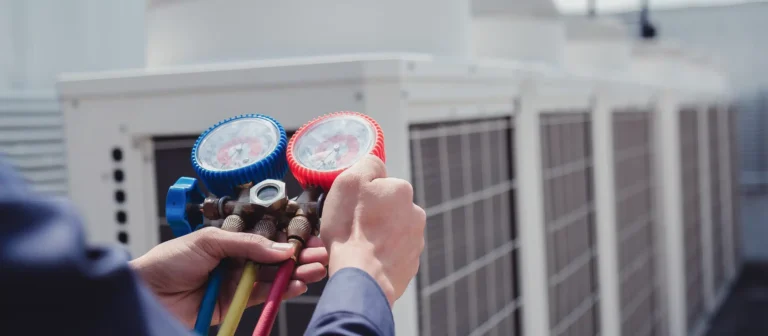
An AC tune-up gets the system ready before the hard work begins.
What an AC Tune-Up Actually Includes
A good air conditioning tune-up focuses on inspection, cleaning, testing, and adjustment. The exact process varies by system type, age, brand, and local conditions, but the goal is always the same: restore efficiency, verify safe operation, and spot failure points before they ruin your weekend.
The outdoor unit usually gets plenty of attention because it lives a rough life. It sits through pollen, grass clippings, leaves, dust, rain, sun, and the occasional ambitious spider. When the condenser coil gets coated with grime, it cannot release heat efficiently. That means higher pressure, longer run times, and added strain on the compressor. Since the compressor is often the most expensive part of the system, treating it kindly is not sentimental. It is financially sensible.
Inside, the technician checks the evaporator coil, blower components, filters, drain lines, wiring, controls, thermostat operation, and airflow. Airflow matters more than many homeowners realize. An air conditioner can have the correct refrigerant charge and still perform poorly if air cannot move across the coil properly. Dirty filters, matted evaporator coils, blocked returns, closed vents, and weak blower motors all contribute to poor comfort and excess strain.
Electrical testing is another big piece. Air conditioners depend on capacitors, contactors, relays, motors, control boards, and wiring. Heat is brutal on electrical components. A capacitor that tests weak in spring may fail outright during the first serious heat wave. A contactor with pitted points may still work, but it is living on borrowed time. Loose wiring can create resistance, and resistance creates heat, which creates more damage. It is a rude little cycle.
During a professional maintenance visit, an air conditioning contractor may also check temperature split, amperage draw, refrigerant pressures when appropriate, condensate drainage, safety switches, and thermostat calibration. None of these checks are particularly flashy, but together they paint a useful picture of system health.
The Parts That Love to Fail When It Is Hot
If you have ever wondered why air conditioning repair seems most common during extreme heat, the answer is simple: that is when the system runs the hardest. A mild 75-degree day is a gentle jog. A 98-degree day with humidity is a triathlon in a wool suit.
Capacitors are frequent culprits. They help motors start and run, and they weaken over time. A capacitor can look perfectly innocent while testing far below its rated value. When it finally fails, the outdoor fan may stop, the compressor may refuse to start, or the system may hum unhappily while accomplishing nothing. That hum is the sound of money considering leaving your wallet.
Contactors also take a beating. They are the switch that allows high-voltage power to reach the outdoor unit. Over thousands of cycles, the contact points can pit, burn, or stick. A failing contactor can cause intermittent operation, which is one of the more annoying categories of trouble because the system behaves during the service visit and misbehaves the moment the technician leaves. HVAC equipment has a mischievous streak.
Fan motors are another common failure point. Outdoor fan motors deal with heat from the sun, heat from the coil, and long run times. Indoor blower motors suffer when filters are neglected or ducts restrict airflow. When motors draw too much amperage, run hot, or develop bearing noise, a tune-up may catch the warning signs before the motor quits.
Drainage problems deserve their own little spotlight. An air conditioner removes moisture from indoor air, and that water has to go somewhere. If the condensate drain clogs with algae, sludge, dust, or whatever mysterious gunk the universe invents inside PVC pipe, water may back up into a pan, trigger a float switch, stain ceilings, or damage flooring. A clogged drain line is not dramatic at first. Then suddenly it is very dramatic, often near drywall.
Dirty Coils Are Tiny Blankets for Your AC
Coils are heat transfer surfaces. The evaporator coil absorbs heat from indoor air. The condenser coil releases heat outside. Anything that coats those surfaces interferes with heat transfer.
A dirty condenser coil acts like a blanket wrapped around the outdoor unit. The compressor has to raise pressure to reject heat, and the system uses more energy to do the same job. In severe cases, the unit may short cycle, overheat, or shut down on safety controls. Even when it continues running, it may cool poorly and age faster.
A dirty evaporator coil can cause its own problems. Dust and debris reduce airflow across the coil. If the coil gets too cold, moisture on the surface can freeze. Ice then blocks even more airflow, which makes the freezing worse. Homeowners often notice weak airflow, warm air from vents, or water around the indoor unit after the ice melts. At that point, the system is not merely asking for help. It has written “help” in frost.
Regular air conditioning maintenance keeps coils cleaner, which keeps the system closer to its designed operating conditions. This does not mean a tune-up can undo years of neglect in fifteen minutes. Severely impacted coils may require deeper cleaning. But annual maintenance helps prevent normal grime from turning into a mechanical sweater.
Refrigerant Is Not Fuel, Despite What Your Uncle Says
One of the most persistent myths in home comfort is that air conditioners “use up” refrigerant. They do not, at least not in a healthy sealed system. Refrigerant circulates. It changes pressure and state, absorbing and releasing heat, but it should not disappear.
If refrigerant is low, there is a leak or there was an incorrect charge at some point. Adding refrigerant without addressing the cause may provide temporary cooling, but it is not a repair in the meaningful sense. It is more like putting air in a tire with a nail in it, then acting surprised when Monday happens.
During an AC tune-up, a technician may evaluate refrigerant performance by checking temperatures, pressures, superheat, subcooling, or other readings depending on the system. If those readings suggest a charge issue, further diagnosis may be needed. Low refrigerant can reduce capacity, increase run time, cause coil freezing, and damage the compressor if ignored long enough.
Not every tune-up includes hooking up gauges automatically, and that is not necessarily a bad thing. Attaching gauges can cause a small amount of refrigerant loss, and on some systems, readings should be checked when symptoms or temperature measurements justify it. A careful technician uses judgment rather than turning every visit into a ritual dance with hoses.
The Filter Is Small, Cheap, and Weirdly Powerful
If air conditioners had a complaint department, half the letters would be about filters.
A dirty filter restricts airflow. Restricted airflow makes the blower work harder and reduces heat exchange across the evaporator coil. That can cause poor comfort, higher energy use, freezing, and stress on equipment. It can also make rooms feel uneven, which leads people to close vents, which makes airflow worse. Home comfort has many traps for the well-intentioned.
Filter replacement frequency depends on the filter type, system usage, household dust, pets, remodeling activity, and whether someone in the home collects throw pillows like rare coins. A one-inch filter may need replacement every one to three months. Larger media filters may last longer. During heavy cooling season, it is worth checking more often.
The key word is “checking.” Do not trust the calendar blindly. Pull the filter and look at it. If it is gray and furry, it is done. If light barely passes through it, it has retired without telling you.
A tune-up gives the technician a chance to inspect filtration, airflow, and return setup. Sometimes the issue is not that the homeowner forgot the filter. Sometimes the system has an undersized return, a poor filter rack, gaps around the filter, or duct problems that drag dust into the equipment. That is where experience matters. A good technician does not just scold the filter. They figure out why the system is eating dust like cereal.
The Thermostat Can Be the Sneaky Villain
Thermostats seem simple. Set temperature, receive comfort. Yet thermostat problems can mimic bigger AC issues.
A thermostat in direct sunlight may read warmer than the actual room. One mounted near a supply vent may satisfy too soon. Bad batteries, loose wiring, incorrect programming, or aging controls can cause intermittent operation. Smart thermostats add convenience, but they also need proper setup, compatible wiring, and sometimes a common wire to avoid power issues.
During an AC tune-up, thermostat operation should be checked along with system response. If the thermostat calls for cooling, does the indoor blower start properly? Does the outdoor unit energize? Does the system shut off when satisfied? Is the temperature reading reasonable? These are basic questions, but basic questions solve many service calls.
I once saw a homeowner convinced their system needed major air conditioning repair because the house never cooled in late afternoon. The equipment checked out fairly well. The thermostat, however, sat on a wall that got blasted by sun through a decorative glass panel. It was not measuring the house. It was measuring a tiny greenhouse with opinions. Moving the thermostat solved more than replacing parts would have.
Why Tune-Ups Save Compressors From a Hard Life
Compressors are the heart of the air conditioning system, though unlike human hearts, they do not benefit from inspirational quotes. They need correct refrigerant conditions, clean coils, proper voltage, adequate airflow, and functional controls.
When other components decline, the compressor often pays the bill. Dirty condenser coil? Compressor runs hotter. Low refrigerant? Compressor may lack proper cooling and lubrication return. Weak capacitor? Compressor struggles to start. Bad fan motor? Head pressure rises. Loose electrical connection? Voltage issues develop. Poor airflow indoors? Operating conditions drift out of range.
A mid-summer compressor failure is one of the more expensive outcomes. Depending on system age, refrigerant type, warranty status, and overall condition, homeowners may face a difficult choice between major repair and replacement. If the system is older, uses phased-down refrigerant, or has other issues, compressor replacement may not be the best investment.
A tune-up cannot make a compressor immortal. Nothing can, not even a sternly worded maintenance agreement. But it can reduce unnecessary strain and catch the conditions that shorten compressor life. That is the real value. Maintenance does not promise perfection. It improves the odds.
Efficiency Is Not Just About the Utility Bill
People often talk about AC maintenance in terms of energy savings, and yes, efficiency matters. A clean, properly operating system usually uses less electricity than one fighting through dirty coils, weak airflow, and failing parts. Depending on the starting condition, the difference can be modest or noticeable.
But efficiency also affects comfort. An efficient system removes heat and humidity more effectively. It runs in healthier cycles. It maintains temperature without marathon operation. It may reduce hot rooms, clammy air, and that unpleasant feeling that the house is technically 74 degrees but somehow still swampy.
Humidity matters. Air conditioners dehumidify as they cool, but only when operating correctly. Oversized systems may short cycle and fail to remove enough moisture. Systems with poor airflow or refrigerant issues may struggle with both temperature and humidity. Duct leakage can pull hot, humid air from attics, crawl spaces, or garages, making the AC work harder and the occupants grumpier.
A tune-up may reveal whether the system itself is the problem or whether the home has duct, insulation, ventilation, or sizing issues. That distinction matters. If a house has leaky ducts in a 130-degree attic, replacing a capacitor will not magically turn the bonus room into a ski lodge.
What Homeowners Can Do Between Professional Visits
A professional air conditioning tune-up does the technical work, but homeowners can help keep the system out of trouble. Not with heroic effort. No one needs to become an HVAC monk. A few habits make a real difference.
- Check the air filter monthly during heavy use, even if you do not replace it every month.
- Keep at least a couple feet of clearance around the outdoor unit, trimming shrubs and removing leaves or grass clippings.
- Make sure supply and return vents stay open and unobstructed by furniture, rugs, or the world’s largest dog bed.
- Pay attention to new noises, odors, weak airflow, water around the indoor unit, or cooling that seems slower than usual.
- Avoid setting the thermostat absurdly low to “cool faster,” because the AC will not work faster. It will just run longer and judge you silently.
These small steps do not replace professional maintenance, but they reduce preventable stress. They also give you a better chance of noticing a problem early. A homeowner who knows what normal sounds like is much more likely to catch abnormal before it becomes expensive.
Spring Is Better Than “Oops, It’s 102”
The best time for an AC tune-up is before peak cooling season. In many climates, that means spring or early summer. The weather is warm enough to test cooling operation properly, but not yet so brutal that every air conditioning repair service in town is booked solid from sunrise to supper.
Scheduling early has practical benefits. If the technician finds a weak capacitor, dirty coil, failing motor, or drain issue, you can handle it before the system is under maximum load. Parts availability is often better. Appointment windows are easier to find. The technician is less likely to be sprinting through a day packed with no-cool emergencies, and you are less likely to be pacing around the kitchen with a bag of frozen peas on your neck.
That said, late maintenance is better than no maintenance. If summer has already started, do not wait until fall out of embarrassment. Air conditioners do not care about your scheduling shame. They care about airflow, heat transfer, and electrical integrity.
Older Systems Need a Different Kind of Conversation
A tune-up on a newer system often focuses on keeping everything clean, calibrated, and within normal ranges. With older systems, the visit should include a more candid discussion about risk.
After 10 to 15 years, many central air conditioning systems begin entering the stage where repairs become more frequent. Some last longer, especially with good maintenance and favorable conditions. Others age faster because of heavy use, poor installation, coastal corrosion, inadequate airflow, or years of neglect. Age alone does not condemn a system, but it changes the math.
For an older unit, a technician may find parts that still operate but show wear. The question becomes whether to replace proactively or monitor. Replacing every aging component at once may be wasteful. Ignoring obvious warning signs may be foolish. Good service lives between those extremes.
For example, a capacitor testing just outside tolerance before a major heat wave is usually worth replacing. A slightly rusty cabinet panel may simply be noted. A noisy blower motor drawing high amperage deserves a serious conversation. A small refrigerant leak in a very old system may raise the question of whether continued repair makes sense or whether heat pump installation or full system replacement should be considered.
This is where trust matters. A good heating contractor or air conditioning contractor explains findings clearly, shows measurements when possible, and distinguishes urgent repairs from watch-list items. Homeowners deserve straight talk, not theatrical doom.
Maintenance Also Protects the Rest of the House
Air conditioning problems can spill into other trades in surprising ways. A clogged condensate drain can damage ceilings, flooring, trim, and insulation. Poor humidity control can encourage musty odors or moisture issues. Electrical problems can trip breakers or overheat components. Duct leaks can pull dust and contaminants into living spaces.
Homes are systems, not collections of unrelated boxes. The AC connects to the electrical system, drainage pathways, attic conditions, ductwork, filtration, and indoor air quality. That is why companies that understand multiple trades can be useful. Service Lion Plumbing Heating Air Electric, for example, works across plumbing, heating, air, and electrical systems, which can help when a comfort issue is not only an AC issue. Sometimes the mystery involves an electrician’s eye for voltage, a plumber’s understanding of drainage, or a heating contractor’s grasp of year-round airflow.
The same house that needs air conditioning maintenance in June may need furnace repair service in January, water heater repair after a hard-water beating, or drain cleaning because tree roots have declared war on the sewer line. Different systems, same principle: small maintenance beats large emergencies.
When a Tune-Up Turns Into a Repair
A tune-up is preventive, but it sometimes uncovers a problem that needs repair. That is not a failure of the tune-up. That is the point.
If a technician finds a burnt contactor, weak capacitor, clogged drain, failing motor, refrigerant leak, or unsafe wiring, the next step is to explain the issue, the risk, and the options. Some repairs are simple and inexpensive. Others require diagnosis beyond the tune-up. A refrigerant leak, for instance, may need leak detection, repair, evacuation, and proper charging. A motor issue may require confirming the control board is not contributing to the failure. An airflow problem may require duct evaluation rather than swapping parts blindly.
Homeowners should ask what was measured, what is recommended, and what happens if the repair waits. Not every issue is an emergency. Some are. A technician who cannot explain the difference is not helping.
There is also a point where repeated air conditioning repair becomes a signal. If a system needs major repairs every summer, runs constantly, cools poorly, and uses a lot of electricity, replacement may be the better long-term decision. That does not mean replacing equipment at the first hiccup. It means comparing repair cost, system age, efficiency, refrigerant type, warranty, comfort, and reliability.
A $250 repair on an eight-year-old system may be a no-brainer. A $2,000 repair on a 17-year-old system with a history of leaks deserves a longer conversation and possibly a cold drink.

The Installation Factor Nobody Likes to Mention
Maintenance helps, but it cannot fully overcome a bad installation. This is the uncomfortable truth hiding behind many recurring AC problems.
An oversized system may cool the air quickly but fail to dehumidify properly. An undersized system may run constantly and never catch up in extreme weather. Poor duct design can starve the equipment for airflow. Incorrect refrigerant charge at installation can shorten equipment life. Bad condensate piping can cause repeated clogs and water problems. Sloppy electrical work can create nuisance failures or safety hazards.
A tune-up can reveal these patterns. If the same system freezes repeatedly despite clean filters, the issue may be airflow, refrigerant, ductwork, or metering device performance. If one side of the house never cools, the problem may be duct balance or load, not thermostat stubbornness. If the outdoor unit is wedged under a deck with poor clearance, it may struggle to reject heat no matter how clean the coil is.
This is why choosing the right installer matters for AC replacement, heat pump installation, and related work. The best equipment installed poorly is like a sports car with square wheels. It may look impressive, but the ride will not inspire poetry.
A Brief Word About Heat Pumps
Heat pumps deserve special mention because they provide both cooling and heating. In cooling mode, they operate much like standard air conditioners. In heating mode, they reverse the process. That means maintenance matters across more of the year.
A heat pump that runs heavily in summer and winter needs regular attention. Outdoor coils, refrigerant charge, defrost controls, reversing valves, blower components, and auxiliary heat operation all affect performance. Skipping maintenance on a heat pump is like asking one employee to work two shifts and never take lunch.
For homes considering heat pump installation, especially where electrification or efficiency is a goal, proper sizing and commissioning are critical. A tune-up mindset should begin on day one. The system should be installed correctly, tested thoroughly, and maintained before problems stack up.
The Funny Thing About Emergency Calls
Emergency AC calls have a predictable soundtrack: ceiling fans on high, dogs panting, someone apologizing for the house being hot, someone else saying, “It was working fine yesterday,” and a thermostat set to 62 in a final act of bargaining.
Technicians understand. Heat makes everyone a little dramatic. But many emergency calls trace back to preventable conditions. Not all, of course. Parts fail. Storms happen. Mice make poor life choices inside electrical compartments. But plenty of mid-summer breakdowns begin as maintenance issues that had months to develop.
A tune-up shifts the timing. Instead of discovering a weak capacitor after it fails on a Saturday, you find it during a planned visit. Instead of learning the drain is clogged because water stains the ceiling, you clear it before the pan overflows. Instead of running a dirty condenser coil through another brutal summer, you clean it before head pressure climbs.
This does not remove all risk. It removes avoidable risk, which is the kind that tends to annoy people most.
How to Judge Whether Your Tune-Up Was Worthwhile
Not all maintenance visits are equal. Some are thorough. Some are rushed. Some are mostly filter changes wearing a costume.
A worthwhile tune-up should leave you with a clearer understanding of your system. The technician should be able to describe what they checked, what they cleaned, what they measured, and what they recommend. You do not need a lecture fit for an engineering conference, but you should not be left with “Yep, looks good” and a bill.
Here is a compact sanity check for a solid maintenance visit:
- The technician inspected both indoor and outdoor equipment, not just the unit that was easiest to reach.
- Coils, drains, filters, electrical components, motors, and thermostat operation were addressed.
- Readings or observations were documented, especially if a repair was recommended.
- The technician explained urgent issues separately from optional improvements.
- You received practical guidance based on your system’s age, condition, and usage.
If a company consistently provides that level of service, keep them. Good technicians are worth their weight in refrigerant, which, given modern refrigerant prices, is not a small compliment.
The AC Tune-Up Is Really a Stress Tune-Up
The best part of preventive maintenance is not just mechanical. It is psychological.
There is comfort in knowing the system has been checked before the hot season. You may still have a breakdown someday, because machines remain machines and chaos remains employed full-time. But you are less likely to be blindsided by obvious problems. You are less likely to pay emergency rates for something that could have been handled calmly. You are less likely to spend the hottest night of the year deciding whether sleeping in the basement is “camping.”
Air conditioning maintenance also gives you time to plan. If the technician says your system is aging but stable, you can start budgeting for eventual replacement. If the ductwork needs attention, you can prioritize improvements. If the electrical components are wearing, you can replace the riskiest ones before peak load. Planning is cheaper than panic, and it involves fewer damp T-shirts.
Mid-summer breakdowns feel sudden, but prevention is usually boring in the best possible way. Clean the coils. Test the electrical parts. Clear the drain. Check the airflow. Verify the refrigerant performance. Replace the filter. Listen for trouble. Do it before the weather turns hostile.
Your air conditioner does not need applause. It does not need motivational speeches. It needs maintenance, airflow, clean heat-transfer surfaces, sound electrical components, and a fighting chance before summer starts throwing elbows.
Give it that, and when July gets obnoxious, your house can remain cool, quiet, and smugly comfortable. Which is exactly the kind of smug we can all support.
Name: Service Lion Plumbing Heating Air Electric
Address: 521 W Briardale Ave, Orange, CA 92865, United States
Phone: (657) 337-3622
Website: https://callservicelion.com/
Email: [email protected]
Hours:
Monday: Open 24 hours
Tuesday: Open 24 hours
Wednesday: Open 24 hours
Thursday: Open 24 hours
Friday: Open 24 hours
Saturday: Open 24 hours
Sunday: Open 24 hours
Open-location code: R48R+WV Orange, California, USA
Map/listing URL:
https://www.google.com/maps/search/?api=1&query=Google&query_place_id=ChIJQU4LBWHV3IARtnABtyykSA4
Google Map:
Socials:
https://www.facebook.com/ServiceLionCA/
https://www.youtube.com/channel/UCR_L35QzsRTxYZtX8PxJvPw
Local Service Information
Service Lion Plumbing Heating Air Electric provides plumbing, drain, heating, air conditioning, and electrical services from its Orange, California location.The company serves homeowners and properties throughout Orange and communities across Orange County and surrounding areas.
Available services include plumbing repairs, water heater work, drain and sewer services, heating and cooling service, electrical repairs, panels, lighting, outlets, and related home-system work.
Service is available for residential properties as well as light commercial needs described within the company's local service-area information.
The company's website emphasizes locally operated service, coordinated home-system support, and practical scheduling for plumbing, HVAC, and electrical needs.
The matching public business listing shows the Orange location as open 24 hours a day, seven days a week.
For service information or scheduling, call (657) 337-3622 or visit https://callservicelion.com/.
The public map listing identifies the business at 521 W Briardale Ave, Orange, CA 92865 and can be used for location and direction information.
Popular Questions About Service Lion Plumbing Heating Air Electric
What services does Service Lion Plumbing Heating Air Electric provide?
The company provides plumbing, drain and sewer, heating, air conditioning, and electrical services. Its published services include plumbing repair, water heaters, drain clearing, sewer work, HVAC repair and installation, electrical repairs, panels, circuit breakers, lighting, outlets, and related services.
Where is Service Lion Plumbing Heating Air Electric located?
The matching business location is 521 W Briardale Ave, Orange, CA 92865, United States.
What areas does Service Lion Plumbing Heating Air Electric serve?
The company serves Orange County and surrounding communities. Its published service-area information includes Orange, Anaheim, Brea, Yorba Linda, Fullerton, Huntington Beach, Newport Beach, Costa Mesa, Irvine, Lake Forest, and additional nearby cities.
Is Service Lion Plumbing Heating Air Electric open 24 hours?
The matching public business listing shows the location as open 24 hours on Monday through Sunday.
Does Service Lion Plumbing Heating Air Electric work on drains and sewer lines?
Yes. Published services include drain clearing, rooter service, camera inspection, hydro jetting, sewer line repair and installation, water line work, slab leak detection, and trenchless sewer line repair.
Does Service Lion Plumbing Heating Air Electric provide heating and air conditioning service?
Yes. Its published HVAC services include air conditioning repair and installation, heating service, furnace work, heat pumps, air ducts, indoor air quality assessments, and thermostat installation.
Does Service Lion Plumbing Heating Air Electric provide electrical service?
Yes. Published electrical services include repairs and installations, electrical panels, circuit breakers, safety inspections, lighting, outlets and switches, surge protection, generators, and EV charging equipment installation.
How can I contact Service Lion Plumbing Heating Air Electric?
Call (657) 337-3622.
Email: [email protected]
Website: https://callservicelion.com/
Facebook: https://www.facebook.com/ServiceLionCA/
Landmarks Near Orange, California
Old Towne Orange Historic District
A central historic district and useful geographic reference point for the Orange community.
Plaza Park
A well-known public gathering point in the center of Old Towne Orange.
Orange Public Library & History Center
A civic landmark serving residents near central Orange.
Hart Park
A major public park and recreation area south of central Orange.
Eisenhower Park
A public park serving neighborhoods in northern Orange.
Santiago Oaks Regional Park
A regional recreation and open-space landmark on the eastern side of Orange.
Irvine Regional Park
A large regional park and recognizable reference point east of the city.
Orange Park Acres
A distinctive residential community and service-area reference point in eastern Orange.
El Modena
An established Orange neighborhood that provides a practical local coverage reference.
Glassell Street
One of the city's principal north-south streets and a useful route through central Orange.
Lincoln Avenue
A major east-west roadway serving northern Orange and nearby communities.
State Route 55
A primary regional freeway connecting Orange with other parts of Orange County.
Ends · TREVORKOGT003